


Pamplona Unveiled: From Medieval Streets to Mountain Escapes - Your Guide to a City Rich in History and Adventure

You’re going to absolutely love Pamplona. It’s one of those Spanish cities that surprises you — it’s not all about the famous bull run, even though that’s the headline act every July. Once you scratch beneath the surface, you’ll find a place that’s full of charm, proper character, and a seriously relaxed vibe when the fiestas aren’t taking over the streets.
You’ll wander through the old town and realise how much history is wrapped up in its narrow lanes and leafy plazas. The old city walls are still standing tall in parts, giving you these brilliant views across the valley — perfect spot if you’ve grabbed a coffee from one of the quieter cafés just off Plaza del Castillo. That square, by the way, is the beating heart of Pamplona. Sit there for a bit, you’ll see locals chatting away, kids running about, and always someone busking or selling something quirky. It’s the kind of place you’ll keep drifting back to.
If you’re into food, Pamplona’s got you sorted. The pintxos bars in the San Nicolas and Estafeta streets are top notch — go hungry and don’t even think about sticking to a menu. Just ask what’s good and follow your nose. You’ll try some absolute gems. And there’s this one place near the old bullring that does the creamiest tortilla you’ve ever tasted — totally unassuming, but unforgettable.
Then there’s the green bit. Yes, Pamplona’s one of the greenest cities in Spain, and you’ll feel it when you stroll through the parks that circle the city. Ciudadela Park is perfect when you just want to chill out on the grass with a cold drink — and the fortress itself looks like something out of a storybook.
Beyond the San Fermín buzz, Pamplona gives you that perfect balance: it’s got the energy when you want it, but also loads of quiet corners, proper local eats, and that easygoing pace you’re going to fall into without even realising. Definitely one of those places where you arrive expecting one thing and leave thinking, “Why didn’t anyone tell me it was this good?”

5 interesting facts about Pamplona
- A popular local dish is called Pisto, a variety of Spanish-type ratatouille with spicy sausage.
- The famous Running of the Bulls festival used to be held in Autumn, this was changed in 1591 due to people being fed up with the wet weather.
- The famous author Ernest Hemingway loved the San Fermin festival, which includes the bull run and was fascinated by bullfighting so spent much time in the city.
- The nearby Roncal Valley is surrounded by several mountains which are more than 2000m high and offer some fabulous photographic opportunities.
- Being so far north Pamplona benefits from a more fertile environment than much of Spain.
Places To Visit In Pamplona

San Fermín Festival: Pamplona is famous for the San Fermín Festival, where the thrilling Running of the Bulls occurs. Experience the excitement and join the locals in this week-long celebration of music, dancing, and traditional events.
Pamplona Cathedral: Admire the stunning Gothic architecture of the Pamplona Cathedral. Explore its intricate interior, including the Chapel of San Fermin and the Treasury Museum.
Ciudadela Park: Relax and unwind in the beautiful Ciudadela Park. Stroll through its lush gardens, enjoy a picnic, or rent a boat to explore the park's charming lake.
Plaza del Castillo: Visit the lively Plaza del Castillo, the heart of Pamplona. This bustling square is lined with cafes, restaurants, and shops, perfect for enjoying coffee or indulging in some retail therapy.
Pamplona City Walls: Discover the ancient city walls that surround Pamplona. Take a leisurely walk along the fortified ramparts and enjoy panoramic views of the city.
Museo de Navarra: Immerse yourself in the art and history of the Navarre region at the Museo de Navarra. Marvel at the collection of Roman artefacts, medieval art, and contemporary works.
Café Iruna: Step into the historic Café Iruna and soak in the ambience of this iconic establishment. Enjoy a coffee or a traditional pintxo while admiring the stunning Belle Époque decor.
Yamaguchi Park: Escape the city bustle and unwind in the tranquil Yamaguchi Park. This Japanese-inspired garden features beautiful cherry blossom trees, serene ponds, and peaceful walking paths.
Baluarte Congress Centre: If you're interested in modern architecture, visit the Baluarte Congress Centre. Its striking design and cultural events make it a prominent landmark in the city.
Navarrería Quarter: Explore the historic Navarrería Quarter, known for its narrow streets, medieval buildings, and charming squares. Don't miss the Church of San Saturnino and the impressive Arch of Cuchillería.
The Grand Cathedral

Work on this Grand cathedral began in the thirteenth century and took one hundred and 150 years to complete. Some new additions to the cathedral happened as recently as the early nineteenth century.
The cathedral is a cultural masterpiece showcasing several architectural style elements, including Gothic, Neoclassical, and Renaissance. It also houses the second-largest bell in Spain, several religious artefacts, and a crypt that holds the remains of several Spanish Kings and Queens.
The Palace of Navarra

This is the most visible piece of Pamplona’s heritage, designed by José de Nagusia in 1840. It is now an administrative centre, although visits to the palace can be scheduled by appointment.
The exterior of the building is home to two extraordinary sculptures representing King Sancho the Great and King Sancho VII the Strong.
There is also a sculpture of Navarre’s coat of arms flanked by one man from the north of Navarre and another man from Navarre’s mountain region.
The interior of the Palace of Navarra building is just as exquisite, here you will find the Throne Room, the Session Room, the Chapel, and the President’s office.
The Museum of Navarra

The Navarra Museum stands opposite the Royal Palace and is well worth visiting; it houses Navarra's greatest art collections and archaeological findings. Some date back to pre-historical periods, while most fall within the Roman, Medieval, Renaissance and Baroque periods.
The most prized works of art at this museum include the Mosaic of Theseus, Goya’s portrait of the Marqués de San Adrián, and the Chest from Leyre.
Saint Nicholas Church

Built in the twelfth century, the Saint Nicholas church had religious and military functions. Its purpose was to dissuade opposing forces from attacking Pamplona.
The church has unusually thick walls, three watchtowers, and wrought iron nails.
The interior of the church is Gothic. It also has a Baroque organ, considered the most important in Pamplona.
The Town Hall

The City Hall is located in the heart of the Old Quarter and is where thousands of people gather on the 6th of July each year to welcome the start of the San Fermin Fiestas.
This historic 13th building was the baser from which King Carlos III enacted a law to stop the centuries of infighting between the three boroughs of the area, Navarrería, San Saturnino and San Nicolas.
The building has been renovated on numerous occasions but none took away its beautiful Baroque and neoclassical facade.
Cafe Iruna

If there is one authentic bar/restaurant you should visit in Pamplona, then it has to be Cafe Iruna, one of Ernest Hemingway's favourite haunts.
A great place to hang out and enjoy a local beer, tapas or a delicious daily menu.
The decor and authentic atmosphere at the Cafe Iruna are quite unique, you can even relax in Hemmingway's corner, an area dedicated to its famous patron.
If you want to follow in the footsteps of Hemmingway head off to the Plaza Castillo where you find his favourite bars such as Bar Txoko, Hotel Quintana, Hotel La Perla, and Cafe Suizo.
The City Walls
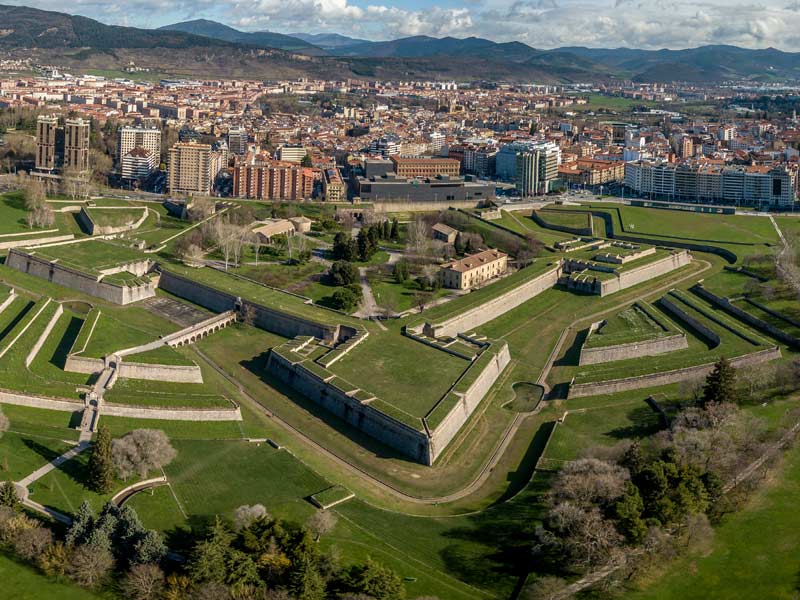
The city walls were integral to Pamplona's past with the Spanish government designated them as a national monument in 1937.
The people of Pamplona built these walls during the Roman conquest, French invasions and war with invading Muslims.
Only three-quarters of the old city walls survived these various onslaughts even though they were repeatedly rebuilt. You can find “The French Entrance,” the Taconera Gardens, and “The Old Fortress” along these City Walls.
Historic Parks

Another must-visit in the city is Pamplona’s exquisite gardens, some of which date as far back as Roman times when Pompey, the great general of Rome, built a base in the area to fight Sertorius, a great adversary of Rome.
Taconera Park is one of the oldest parks in this city offering wide paths for pedestrians, sculptures at every corner and pretty ornamental flower beds. Other picturesque parks include Media Luna Park, Yamaguchi and Arga Park.
The Gastronomy of Pamplona

Pamplona has a rich gastronomic tradition that draws on both Spanish and Basque culinary influences. One of the most famous local specialities is pintxos, small snacks typically served on bread with a variety of toppings.
Popular dishes in Pamplona include lamb stew (cordero al chilindrón), made with tomatoes and peppers, and cod (bacalao) prepared in a variety of ways. Chistorra, a type of spicy sausage is another favourite that's often served with bread or roasted peppers.
Pamplona is also known for its excellent wine, with the Navarra region producing a wide variety of high-quality wines. Visitors can enjoy wine tastings and tours at bodegas throughout the region, including Bodegas Irache and Bodegas Ochoa.
Overall, Pamplona is a foodie's paradise, offering a range of delicious local specialities and culinary experiences that should be tried and enjoyed at every possible occasion.
Some of the most popular dishes in Pamplona and the Navarre Region are:
- Winter vegetables: Navarre is known for its high-quality vegetables, such as asparagus, artichokes, and leeks. They are usually cooked with olive oil, garlic and salt, and sometimes with ham or eggs. They are a delicacy that can be enjoyed from January to February.
- Idiazabal cheese: This is a cheese made from raw sheep's milk that has a smoky and slightly spicy flavour. It is protected by a designation of origin and can be eaten with quince paste or honey. It is one of the most typical cheeses of the region, along with Roncal cheese.
- Chistorra: This is a thin sausage made from pork, garlic, salt and paprika. It is cured for a short time and then fried or grilled. It can be eaten as a snack, as part of a sandwich or as an ingredient in other dishes, such as scrambled eggs.
- Ajoarriero: This is a dish made from salt cod, potatoes, garlic, eggs and oil. It is cooked slowly until it becomes a creamy paste that can be spread on bread or eaten with a spoon. It is said that this dish was invented by mule drivers who carried salt cod across the mountains.
- Cazuelica: This is a small clay pot filled with a stew or soup made with local ingredients, such as meat, vegetables, beans or mushrooms. It is usually accompanied by bread. It is a traditional dish that can be found in many bars and restaurants, especially during Cazuelica Week in October.
- Canutillos: These are sweet pastries made from thin dough that is rolled into tubes and filled with cream or custard. They are then fried and sprinkled with sugar or honey. They are typical of Pamplona and are often eaten during the San Fermín festival.
Recommended Bars & Restaurants
Cafe Iruna: A favourite haunt of Ernest Hemingway a great place to enjoy excellent coffee and a quick homemade tapa.
Restaurant Besseriberri: This is a popular fine dining restaurant offering unique cuisine prepared by the amazing young chef Inaki Andradas. This master chef offers a gastronomic infusion of food with its roots firmly in the Navarra region. You will need to make your reservation well in advance to avoid disappointment.
Restaurant Jostexo: This is a family-run eatery offering traditional recipes creatively served. Another one named after the famous patron saint of Pamplona is the Restaurant San Fermin which serves a variety of dishes from the Navarra region.
